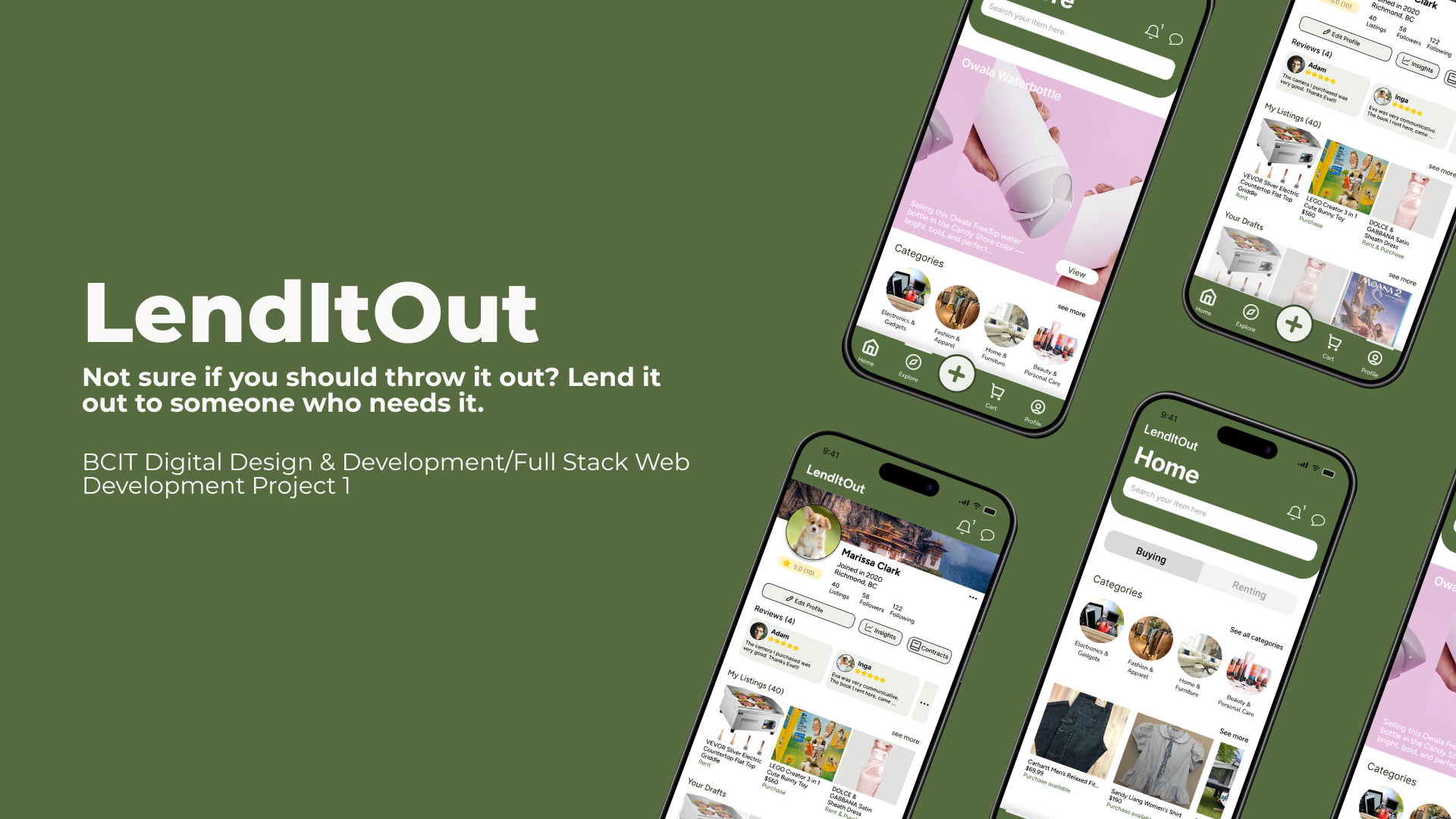
LendItOut: Building a Safer Peer-to-Peer Rental Experience
Client
- BCIT, D3/FSWD Project 1 (Wim Teuling)
Timeline
- January 2025–May 2025
Role
- UX/UI Designer
Team Size
- 7 members
Software
- Google sheets, Google Doc, Figma, Adobe Suite
Brief
LendItOut is an all-in-one marketplace that allows users to rent, buy, and sell items in one seamless platform. Unlike traditional marketplaces, which focus solely on buying and selling, LendItOut is built around flexibility; letting people temporarily borrow what they need and purchase it later if desired.
What was the result
The outcome was LendItOut, an all-in-one online marketplace designed to connect individuals through peer-to-peer lending. The platform enables users to easily rent, lend, or borrow everday items—helping communities save money, minimize waste, and maximize the use of resources they already own.
This was the process
Key Findings
Existing platforms suffer from trust gaps—users fear scams, fake reviews, payment insecurity, and counterfeit listings—alongside rental risks like damage or loss without clear liability. Onboarding feels demanding, communication between users is clunky, listings often mislead on quality/availability, search lacks precision, pricing confuses fairness, notifications overwhelm or underwhelm, support lags, and policies remain unclear.
User Research Reveals Marketplace Pain Points
Using insights from our user research, our team identified critical pain points hindering peer-to-peer marketplaces: trust and safety gaps like scams, fake reviews, and payment insecurity; rental liability fears around damage, loss, or unclear responsibility; cumbersome onboarding processes and core user flows that demand too much effort; poor inter-user communication leading to misunderstandings; inaccurate product listings misrepresenting quality or condition; ineffective search tools and availability tracking; and pricing frustrations where fair market value remains opaque. These barriers stifled user participation, fostered hesitation, and undermined efficient resource sharing in communities.
Secondary Research Shapes Secure Redesign
We supplemented primary findings with secondary research into online marketplace legality, regulatory compliance, and proven business models—analyzing platforms like Facebook Marketplace and Kijiji for operational strategies, revenue streams (e.g., boosted listings), and risk mitigation tactics. This dual approach fueled critical thinking, guiding us to redesign LendItOut as a reliable, intuitive platform that prioritizes security through verified accounts and deposits, simplifies flows for seamless engagement, and builds lasting user trust via transparent policies and streamlined support.
 Research snapshot
This was the approach we went with
From user research insights, I proposed targeted solutions to address key marketplace pain points, balancing practicality with the project's scope.
| Proposed Solution | Purpose / Benefit | Future AI Enhancement |
|---|---|---|
| Mandatory Account Verification | Requires users to verify accounts before buying or selling, minimizing anonymous transaction risks and enhancing trust. | AI could automatically validate identity documents and detect suspicious or fraudulent profiles. |
| Security Deposits | Applies deposits on listings above a set price threshold, empowering owners to control risk and reduce chances of damage or theft. | AI could dynamically adjust deposit amounts based on risk scores, item value, and renter history. |
| Category-Based Pricing Ranges | Establishes minimum and maximum pricing per category to prevent overcharging or underpricing. | AI could suggest optimal rates through intelligent pricing models and personalized discovery recommendations. |
| Limitations (MVP Context) | These safety measures were effective but constrained by MVP scope and resources. | With more flexibility, AI integration would enhance safety, personalization, and automation across onboarding, support, and notifications. |
Like what you see?
Let's make something amazing and usable that people actually love to use, because great design should feel effortless and meaningful in everyday life.